
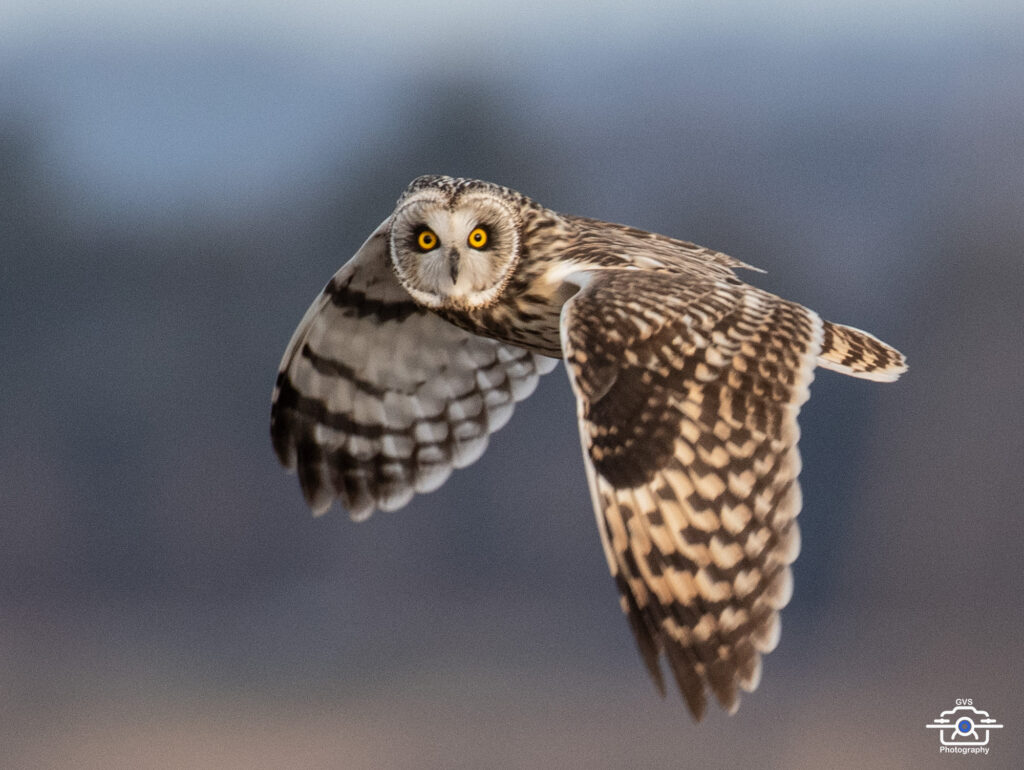
Among the most fascinating raptors found across open landscapes is the short-eared owl (Asio flammeus). Known for its buoyant flight and ghostlike presence over grasslands and marshes, this owl is a favorite subject for wildlife photographers and bird watchers alike. Unlike many owl species that are strictly nocturnal, short-eared owls are often active during daylight hours, particularly at dawn and dusk. This unique behavior offers rare opportunities to witness an owl hunting in the open.
Despite its name, the short-eared owl does not actually have noticeably short ears. The “ears” referenced in its name are small feather tufts on the top of its head, which are often flattened and barely visible. What truly stands out are its large yellow eyes, dark eye patches, and round facial disk that helps funnel sound directly to its ears, allowing it to detect prey hidden beneath grass or snow.
Short-eared owls are widely distributed across the globe, inhabiting parts of North America, Europe, Asia, and South America. In North America, they are commonly found in open habitats such as grasslands, coastal marshes, prairies, and tundra. These environments provide the perfect hunting grounds for the owl’s preferred prey—primarily small mammals like voles, mice, and shrews.
One of the most captivating aspects of the short-eared owl is its hunting style. Rather than perching and diving like many other raptors, this owl flies low over fields in a slow, buoyant, moth-like flight pattern. As it glides silently above the ground, it uses its exceptional hearing and keen eyesight to locate movement below. Once prey is detected, the owl drops quickly, often disappearing briefly into the tall grass before reemerging with its catch.
Short-eared owls also differ from many other owl species in their nesting habits. Instead of nesting in trees, they typically build their nests on the ground, hidden within tall grasses or dense vegetation. The female constructs a simple nest by scraping a shallow depression in the soil and lining it with grasses and feathers. Because ground nests are vulnerable to predators and environmental changes, successful breeding depends heavily on habitat conditions and prey availability.
Another remarkable feature of these owls is their irruptive migration patterns. Unlike species that migrate predictably every year, short-eared owl populations move based on food supply. When rodent populations decline in one region, these owls may travel hundreds or even thousands of miles in search of better hunting grounds.
Unfortunately, short-eared owl populations have been declining in many areas due to habitat loss, agricultural development, and human disturbance. Grasslands and wetlands—critical habitats for these birds—are among the most threatened ecosystems worldwide. Conservation efforts aimed at preserving open landscapes are vital for maintaining healthy populations of this species.
For wildlife photographers and nature enthusiasts, spotting a short-eared owl drifting across a winter field is a magical experience. Its silent flight, piercing gaze, and graceful movements embody the mystery and beauty of wild landscapes. Protecting these habitats ensures that future generations will continue to witness one of nature’s most elegant aerial hunters.